Day One in Toronto
Station ElevenDay One in Toronto is the threshold between ordinary life and the collapse as Kirsten Raymonde experiences it: she is a child performing in King Lear when the lead actor, Arthur Leander, suffers a fatal heart attack onstage. Kirsten later calls the night either Day One or Night One, unsure even of how to name it. That uncertainty sits beside one sharply retained memory—the sound of Arthur striking a plywood pillar—and the subsequent life of Shakespeare in the travelling company she joins.
The night of the performance
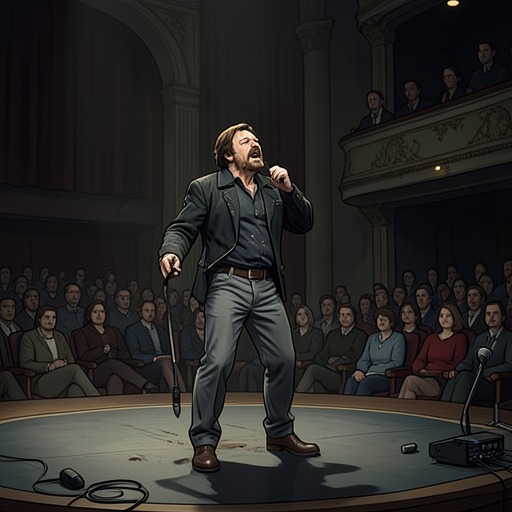
Kirsten was in a production of King Lear in Toronto, with Arthur Leander playing the lead. She stood behind him onstage with two other girls and could not see his face when he collapsed. Instead, she remembers commotion just in front of the stage, Arthur stumbling backward, his arm flailing, and a sharp impact as his hand struck the plywood pillar beside her head. A man from the audience climbed onto the stage and ran toward him. For Kirsten, the death is remembered through these close, partial details rather than a complete view of what happened.
The event became the boundary by which she later described the end of the old world. Asked whether she had been with her parents in Toronto, she said no: that last night, which she could not decide whether to call Day One or Night One, she was at the theatre. Her naming hesitates, but the scene itself remains unusually clear. She recalled little about Arthur beyond an impression of kindness and a sense that they had been friends, yet she remembered the night of his death distinctly.
Flight from Toronto
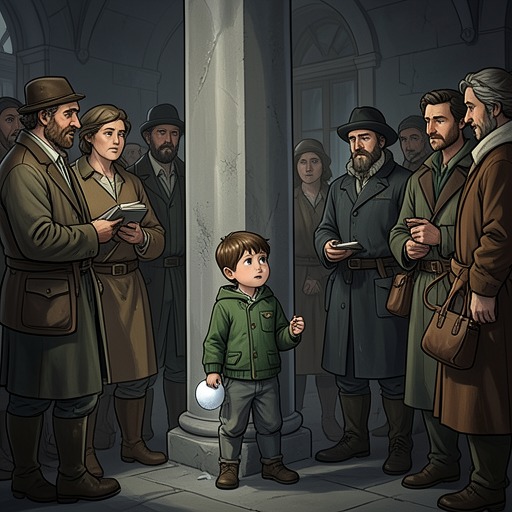
The theatre memory survives more clearly than Kirsten’s recollection of the days around it. She spent the final days in a basement watching television as the neighbourhood emptied. Peter Raymonde went out at night to steal food, as Kirsten later supposed. One morning he told her they had to leave, hotwired a car abandoned by neighbours, and drove until the traffic trapped them. The expressway ramps and side roads were jammed with abandoned vehicles, so the siblings eventually continued on foot with everyone else.
Kirsten later acknowledged that she knew she had left Toronto with her brother partly because he had told her so. The contrast between this borrowed knowledge and her precise recollection of Arthur’s fall makes the night at the theatre a fixed point in a much less accessible personal history. It is not a complete account of the departure or the city’s emptying; it is the moment her memory holds fast while surrounding details recede.
A performance preserved in print
Years later, a newspaper published irregularly in New Petoskey carried a rapturous review of a King Lear performance by the Travelling Symphony. It singled out Gil Harris as Lear and Kirsten Raymonde as Cordelia. The paper’s account makes the childhood production and Arthur’s death legible within a longer theatrical life: Kirsten, once a child in the company of Arthur onstage, has become an actor whose Shakespeare performances are reported and remembered in settlements beyond Toronto.
The same newspaper preserved Kirsten’s interview with François Diallo, its librarian and publisher. The interview records her uncertainty about the name of the night and the limits of what she remembers, while retaining the sensory detail of the blow against the pillar. The newspaper thus functions as more than a record of events: it carries forward a performance and a survivor’s partial testimony into a world where shared histories have become scarce.
The night’s echo in the travelling repertoire
The Travelling Symphony continues to perform Shakespeare after the collapse. At St. Deborah by the Water, Kirsten plays Titania in A Midsummer Night’s Dream in a parking lot near Lake Michigan. Candlelight softens the scar on her cheek; she wears a flower crown and a scavenged wedding dress streaked blue with a child’s watercolour. As she speaks of contagious fogs and altered seasons, the play’s history of theatre reopening after plague—and closing again amid recurring deaths—resonates with the changed world around the performance.
That later scene does not reproduce the Toronto night; it shows what survives it. The Symphony’s caravans bear the words “Because survival is insufficient,” and its members perform Shakespeare and music for audiences in settlements they pass through. At Severn City Airport, after five weeks of repairs and performances on alternate evenings, the company leaves behind people still humming the music and recalling the plays. Day One in Toronto remains a death witnessed in a theatre, but Shakespeare persists as a bodily, communal practice: remembered not only in testimony or print, but spoken again before a live audience.